


How Middle East Geopolitics May Influence Property Investment in Istanbul
As of March 2026, the ongoing Iran–Israel conflict continues to create geopolitical uncertainty across the Middle East. Periodic escalations involving targeted strikes, maritime incidents, and proxy activity across the Levant have raised concerns among investors and businesses operating in the region.
While energy markets and shipping insurance costs experienced an initial spike earlier in the conflict, they have since stabilized to some extent. However, the regional security environment remains fragile.
For international investors, these developments influence capital flows, migration patterns, business confidence, and cross-border real estate investment. Istanbul, positioned as a major financial and commercial hub between Europe and the Middle East, is naturally affected by these regional dynamics.
Despite short-term uncertainty, the Istanbul property market continues to show resilience due to strong domestic demand, demographic growth, and limited supply in central districts.
Impact of the Iran–Israel Conflict on the Istanbul Property Market
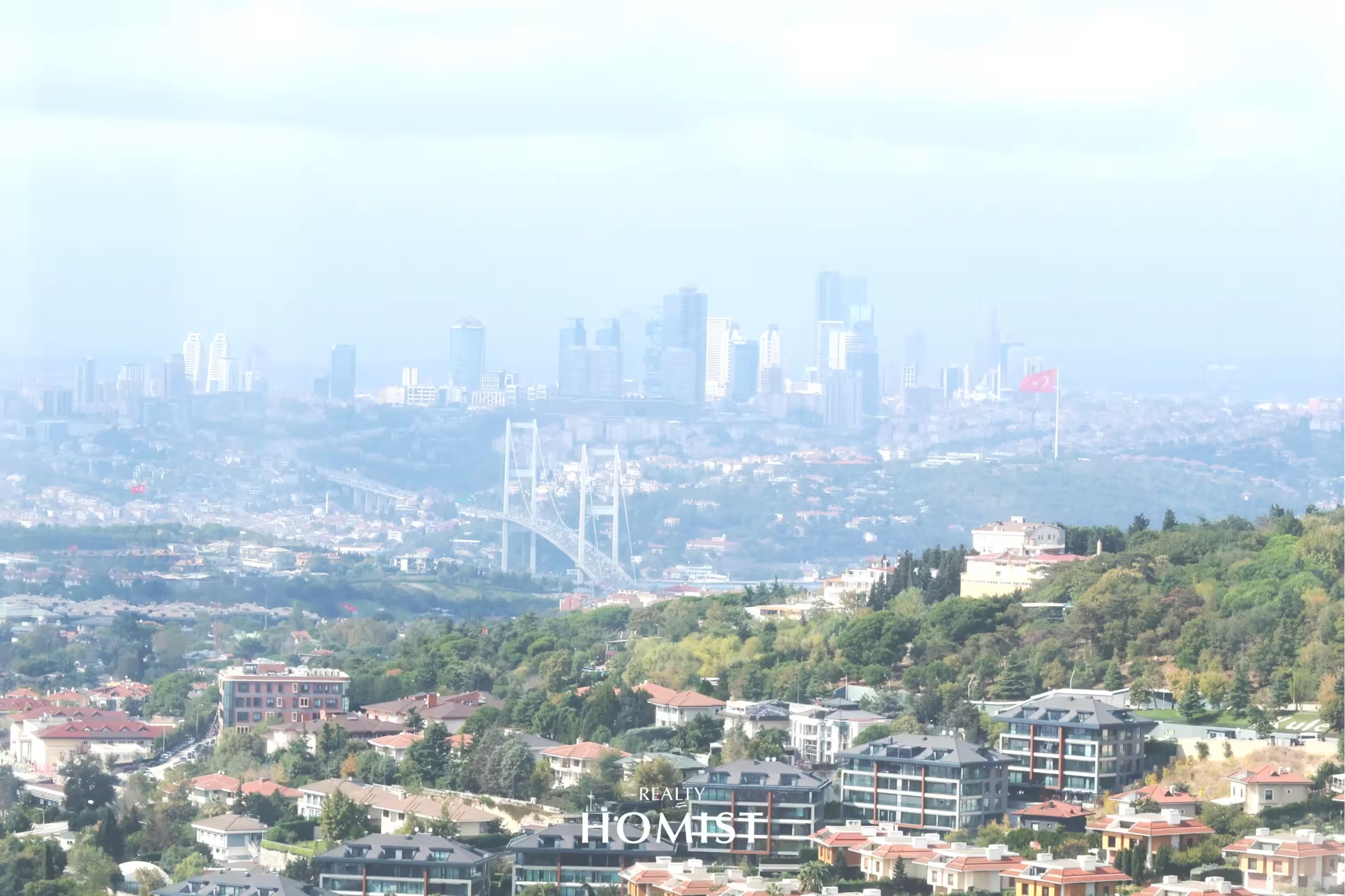
1. Foreign Investor Sentiment
Current Market Conditions
International real estate investors—particularly from Gulf countries and Iran—initially reacted cautiously to the escalation of tensions in the region. While investor hesitation remains visible, the situation has stabilized compared to the early phase of the conflict.
Global financial conditions, including tighter liquidity and risk-averse capital allocation, have also contributed to a more cautious investment environment.
Market Implications
Properties that rely heavily on foreign buyers, particularly luxury developments and newly launched projects, may experience temporary slowdowns in transaction volumes during periods of geopolitical escalation.
However, Istanbul remains one of the most accessible and diversified property markets in the region, which continues to attract long-term investors seeking geographic diversification.
2. Property Price Trends in Istanbul
Market Performance in 2026
Despite geopolitical uncertainty, Istanbul’s property prices have shown relative stability in 2026. Prime residential areas continue to experience modest appreciation, supported by limited supply and consistent local demand.
In contrast, some new developments targeting foreign investors are seeing slower sales absorption rates.
Outlook for Property Values
The future trajectory of Istanbul real estate prices will depend on several factors:
- Continued strength of domestic demand
- Foreign investment recovery once geopolitical tensions ease
- Limited supply of quality housing in central districts
Ready properties and completed units currently enjoy stronger price support compared to off-plan developments.
3. Migration Trends and Rental Demand
Growing Rental Market Demand
Regional instability has led to continued migration flows from Iran and neighboring countries, including students, entrepreneurs, and families relocating for education or business.
This migration trend has increased rental demand in areas close to universities, business districts, and international schools.
Key Rental Hotspots
Districts experiencing strong rental demand include:
- Central districts with established infrastructure
- Areas close to major universities
- Well-connected urban neighborhoods with public transport access
Investment Implications
For investors, these trends translate into stable rental demand and potentially improving rental yields, particularly in mid-market residential properties.
However, sustained migration without sufficient affordable housing supply may place additional pressure on the rental market over time.
4. Construction Sector and Development Pipeline
Current Development Landscape
The normalization of global commodity prices has reduced some pressure on construction costs compared to 2024–2025 levels. Nevertheless, developers continue to face challenges including:
- Higher financing costs
- Logistics disruptions
- Slower foreign investor demand
As a result, some developers have delayed project launches or adjusted construction timelines.
Market Implications
Projects that are completed or close to delivery are gaining a competitive advantage in the current market environment.
Developers are increasingly prioritizing projects with clear cash-flow visibility, while speculative developments targeting foreign buyers may be postponed.
5. Government Policies and Foreign Investment
Turkey continues to position itself as a strategic destination for international property investment.
Policies affecting foreign buyers include:
- Citizenship by investment programs
- Regulatory incentives for property investors
- Tax and legal frameworks supporting foreign ownership
Changes or improvements in these policies could quickly revive international investor demand, especially if geopolitical tensions in the Middle East begin to ease.
Best Performing Property Locations in Istanbul
Not all districts are affected equally by geopolitical developments. Some locations remain consistently attractive for both domestic and international buyers.
Prime Central Districts
Areas such as Beşiktaş, Şişli, and Kadıköy remain among the most resilient real estate markets in Istanbul. These districts benefit from:
- Established infrastructure
- Business and cultural centers
- Strong rental demand
- Limited development land
Emerging Residential Areas
Suburban districts offering modern housing developments and strong amenities are also performing well, particularly when projects are completed and ready for occupancy.
These areas often provide higher rental yields and more affordable entry prices for investors.
Summary: Istanbul Real Estate Market Outlook
| Market Factor | Short-Term Impact | Long-Term Outlook |
|---|---|---|
| Foreign Investment | Temporary slowdown during geopolitical spikes | Recovery likely if tensions ease |
| Domestic Demand | Stable and supportive | Continues to underpin the market |
| Property Prices | Resilient in prime districts | Gradual appreciation possible |
| Rental Demand | Increasing in key areas | Higher yields in migration-driven locations |
| Construction Activity | Selective project delays | Greater value for completed projects |
Investment Strategy for 2026
For investors evaluating opportunities in the Istanbul property market during geopolitical uncertainty, several strategies stand out:
1. Focus on completed or near-completion projects
These assets provide immediate usability and lower development risk.
2. Prioritize strong rental locations
Properties in central districts or near business and university hubs offer stable demand.
3. Monitor government investment incentives
Policy changes can significantly impact investor returns and demand levels.
4. Conduct scenario-based investment planning
Investors should evaluate property performance under both short-term volatility and long-term normalization scenarios.
Conclusion: Resilient Fundamentals for Istanbul Real Estate
Although the Iran–Israel conflict introduces short-term uncertainty across the Middle East, Istanbul’s real estate market remains supported by strong domestic demand, demographic growth, and strategic geographic positioning.
Temporary fluctuations in foreign investment may occur, particularly in luxury and international buyer segments. However, long-term fundamentals remain positive for investors who focus on prime locations, completed properties, and sustainable rental income opportunities.
For international investors seeking diversification and long-term growth, Istanbul continues to represent one of the most dynamic and resilient real estate markets in the broader region.
Interested in investing in Istanbul real estate?
Realty Homist provides professional advisory services for international investors looking to buy property in Istanbul and Dubai. Our team offers market insights, investment analysis, and access to exclusive residential developments.
Contact us today:
Email: contact@homist.tr
Phone: +90 506 030 8008
Website: www.homist.tr
 English
  فارسی
فارسی